
What are we doing with Development Day?
The why and what of MDC's Inaugural Development Day '26
Last October, I was staring at a problem.
At the rising of the General Assembly of Victoria I had just become the Convener of the Ministry Development Committee – a committee in the process of change and I felt like the new guy still. But that wasn’t the problem.
We’re a committee that presently doesn’t have development staff, and so a lot of the work falls on a Convener and Administrator. But that wasn’t the problem.
Added to that, we’re a committee that seems to attract more opinions than other committees of the PCV as to what we should be doing. Rightly so, because by many measures the MDC stewards gospel resources that could help our denomination in many ways – and that’s where I started staring at the actual problem.
Here it is. How does the MDC actually help leaders revitalize congregations and Presbyteries?
The solution I think starts with an annual Development Day.
A day when we together stare at our problem, and together develop solutions.
Not solutions that are just dressed up in spin.
Not solutions that are just seen in cash handouts.
Not solutions that are off the shelf plug-and-play from somewhere else.
What we need is embedded in the culture change we need.
In a day and age where we could just contract out the help by calling in the expert professionals of parachurch consultancy, I think that we in the PCV have an opportunity before us. We are a denomination that has been revitalising since union, and so we have experienced practitioners who have been doing this.
We want to actually help leaders on the frontline of revitalization, in a time and place when the helping itself has become inaccessible. In the wider Australian church, ministry development, leadership development, has become way too expensive through the existing hub and spoke model on offer. If you want to receive help, the few major providers of development are often inaccessible by the congregations that need the most help.
The legacy consultancy model, has become such industrial complex of expense that it prices people out of accessing such help. And then, if you can afford it - if we graph the cost to input-output ratio, the question is: is the investment worth it?
In my local context at Reforming, we have been thinking about very similar problems and solutions for some time. So within our leadership development ministry of Cruciforming, we have come up with four principles that I’ve applied to the “why have an MDC Development Day” (borrowed from here at Cruciforming).
We seek to be thoughtful about hosting development that is:
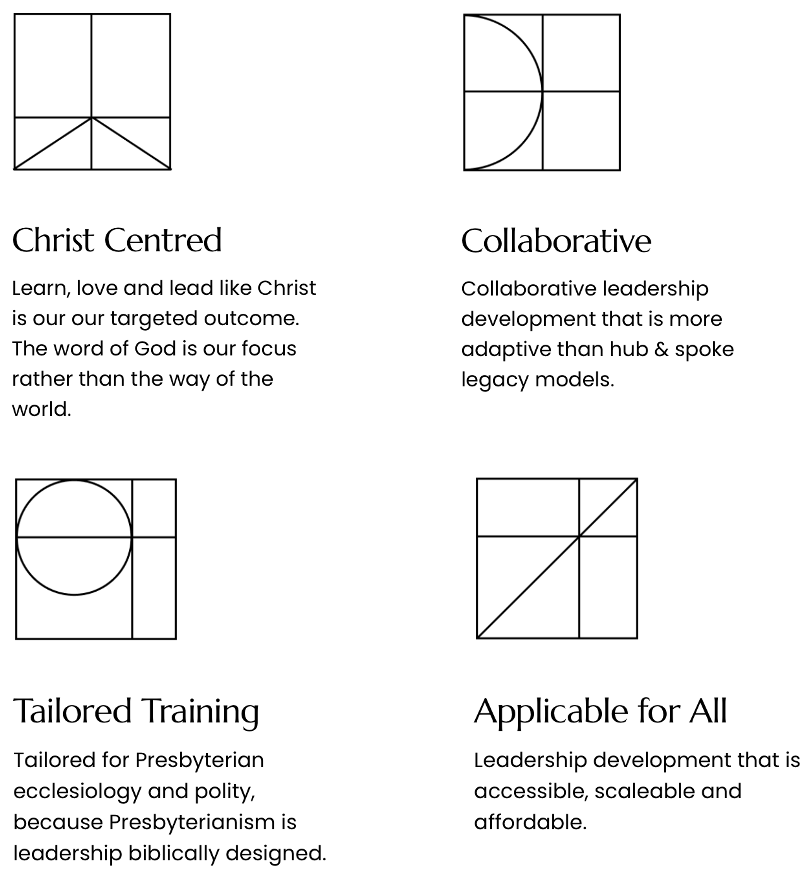
1. CHRIST CENTRED We are convinced that leadership development for revitalisation ought to have a culture of Christ. That should be a “no brainer”, but it is one of the things that needs to be said because it is often forgotten. 2. COLLABORATIVE A lot of conferences and coalitions end up being a handful of people who hand out all the answers. But we don’t believe a few have all the answers. Wouldn’t it be great to see more ruling elders taking part in leading seminars at future Development Days! For we seek to fostering collaboration, and not just deliver top-down solutions. 3. TAILORD TRAINING A lot of the leadership development models I’ve previously engaged with seem to miss the plurality and shared authority of biblical eldership, Sessions are leadership teams in a congregations. The legacy model of training that focuses on the senior minister often misses designing and delivering on healthy leadership training. But since Presbyterianism is leadership defined, we seek to have a framework for providing tailored training for our ecclesiology and polity – so that you know when we talk leadership we are talking about teams of elders, be that in a Session or a Presbytery. 4. APPLICABLE FOR ALL The MDC, I think, are positioned for an opportunity here. Where we want to make this accessible for all leaders. As I said, too often the leadership training and conferences in Australia are priced and platformed out of reach for many of the smaller churches and leaders of Australia. So I’d like to address this problem by making Development Day accessible and scalable for all sizes and types of congregational contexts. And to enable all this, we want to make this affordable for all. Where the only cost is to take up your cross. Which is one of the differences between this conference and others. That if you’re a an Elder in a grant receiving regional charge, we’re paying for your accommodation to come to Development Day. My prayer is that not only will the leaders who come to Development Days be helped by our experienced practitioners, but that for future conferences they would speak as experienced practitioners. For last October, I was staring at a problem. How can MDC actually help leaders revitalize congregations and Presbyteries? Problems need solutions, and Development Day ’26 is a start. I’m still staring at some other problems, and so there’s some ideas being built in R&D that will add to our helps for you. Watch this space, we pray about our problems together.
