
Development Day +1: Why Conferences Aren't Enough
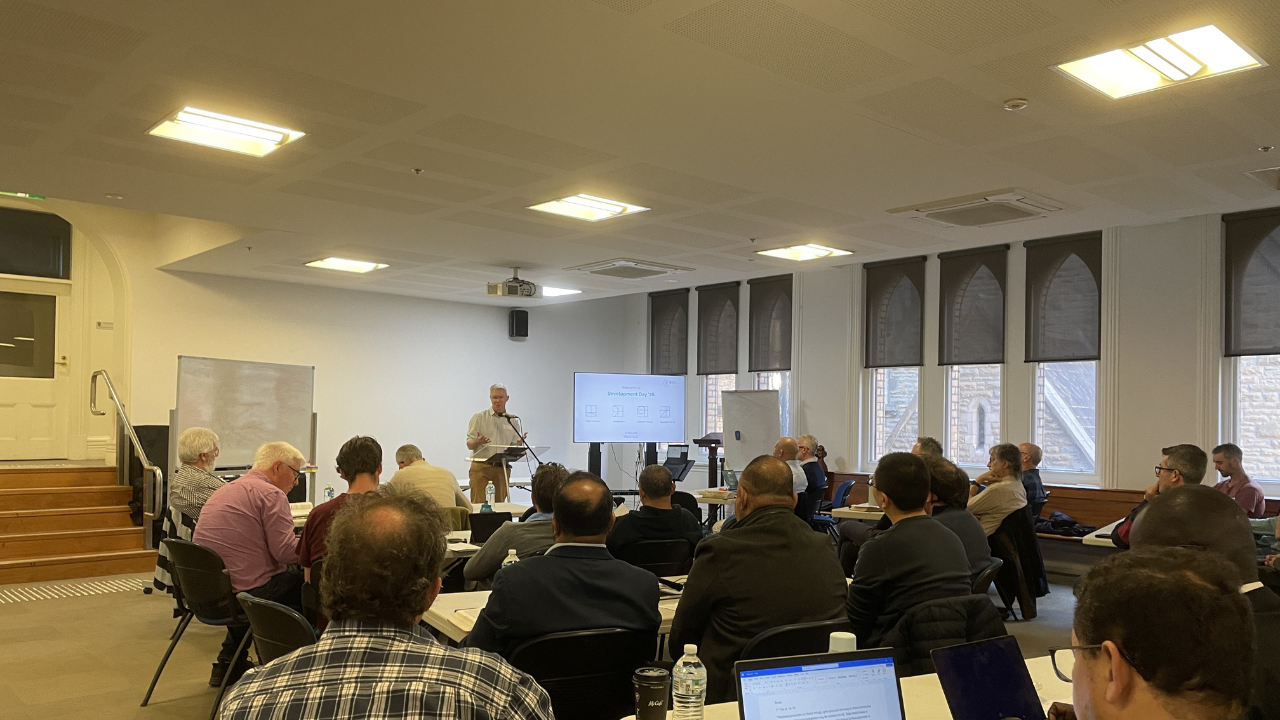
Beyond the Field Day
My dad was a farmer for over forty years (still is in his 80’s), and in that time he went to more field days and conferences than he could probably count, and I went to a lot of those with him as his son/apprentice.
Dad would come home with a folder full of notes, a head full of ideas, and genuine enthusiasm about a new pasture rotation system, a different approach to fertiliser timing, a new crop such as Faba Beans (“Failure Beans” anyone?) or some innovative piece of equipment that he couldn’t afford and so had to figure out how to build it himself, modify or make do.
And then life on the farm continued. The ideas sat in the folder. Some of them never made it onto the ground at all. Others got somewhat of a trial - a paddock here, a season there, without the follow-through needed to actually see whether they worked. Not because Dad didn't believe in them. He'd seen the results with his own eyes, talked to the farmers who'd implemented them, understood the principles. But the gap between hearing about a better way of doing things and actually doing it on his own ground, with his own soil, his own stock, his own routines and constraints, was enormous. And that gap rarely closed on its own.
It wasn't a failure of information. Dad had plenty of that. It was a failure of implementation, and implementation is hard, unglamorous, and easy to keep deferring.
The same gap shows up in ministry
Anyone who has been in pastoral ministry for more than a few years will recognise this pattern immediately. We go to a conference. We hear a brilliant series on preaching, or pastoral care, or church planting, or eldership training. We come away energised, convinced, even a little envious of the church whose example was held up as the model. We take notes. We might even buy the book.
And then we go back to our own context, our own congregation, our own elders and leaders (even our own Presbytery) our own pressures and routines, and the ideas sit in the folder. Not because we don't believe them. Not because we're lazy or unconvinced. But because the conference gave us the what and sometimes the why, but rarely the how of getting it from a notebook into the actual life of our actual church, this week, with these actual people.
A conference is, in that sense, a lot like a field day. You see someone else's paddock, already established, already producing. What you don't see is the years of trial, adjustment, failure, and stubborn persistence that got that paddock to look the way it does on the day you visit. You see the harvest, not the slow work of preparing the ground.
Why implementation is harder than inspiration
There are a few reasons the implementation gap is so persistent, and they're worth naming honestly.
Inspiration is an event; implementation is a process. A conference happens over a day, two days, a week. It has a clear beginning and end, a program, a sense of momentum. Implementation has none of that. It's the slow, repeated work of doing something differently next Sunday, and the Sunday after that, and the one after that — usually without anyone watching, measuring, or even noticing.
Other people's ground isn't your ground. The model church, the model farm, the model ministry has its own soil (I don’t believe the current talk around evangelicals in Australia that “there is no difference in the soils”), its own history, its own people, its own particular mix of strengths and constraints.
An idea that worked brilliantly there may need real adaptation before it will work here. That adaptation work is precisely the work that conferences, by their nature, can't do for you.
The tyranny of the urgent reasserts itself. The week after a conference is, ironically, often one of the busiest. Sermons still need writing, pastoral visits still need making, the things that didn't stop while you were away are now waiting for you. The new idea has to compete with everything that was already there, and it usually loses — not because it's unimportant, but because it's not yet urgent.
There's no accountability built in. A conference speaker doesn't follow up with you in six weeks to ask how the new approach to small groups is going. Nobody checks whether the resolution made in the car on the drive home actually became a changed practice. Without some structure for follow-through, even the best ideas tend to evaporate.
What my dad eventually figured out
My Dad constantly had to work out how to do more with less, which meant he had to take big conference ideas and turn them into small wins on his ground. I think I learned more from him in this way than he understands. And much of this translates fairly directly to pastoral ministry.
Dad started small and specific. Not "I'm going to overhaul our whole approach to soil management," but "I'm going to trial this on this one paddock this season and see what happens." A small, bounded experiment is something you can actually start on Monday, rather than something so big it never quite gets scheduled.
Dad built in a check-in. Sometimes that was as simple as talking to me about the difference a change made at the end of the season, what did you try, what happened, what would you do differently. The encouraging accountability didn't need to be elaborate. It just needed to exist.
Dad expected adaptation, a lot. The idea from the conference was a starting point, not a blueprint to be followed exactly. Dad would often take the principle behind something — say, the reasoning behind a different cropping rotation — and then work out what that principle actually meant given his particular paddocks, his particular stock, his particular climate. The principle travelled; the precise method often had to be reworked.
And Dad kept trying things at it longer than it felt comfortable. Most genuinely helpful approaches look worse before they look better, there's a learning curve, an adjustment period, sometimes a rough season or two. The farmers who gave up after one disappointing trial usually concluded "that doesn't work here," when often what was needed was simply more time and refinement.
What this might mean for us
If you've just come back from Development Day, or another conference be that bigger or a small meeting of minds, or you're about to head to one - it might be worth asking, before you even arrive: what would it look like to actually implement one thing from this, in my context, in the next month?
Not everything. One thing. Something small enough to start without needing to clear your whole calendar, but specific enough that you'll actually know whether you did it.
And it's worth thinking about who your "neighbour comparing notes" might be. A fellow elder, a ministry friend, a small group of pastors who agree to ask each other in six weeks: did you try it? What happened? That single structure, someone who will ask, does more to close the implementation gap than almost anything else.
Conferences and field days have real value. They expose us to ideas, principles, and examples we'd never encounter on our own, and they're often genuinely energising. But the value of a field day was never meant to be measured by how many Dad attended. It was measured by what eventually grew in his own paddocks. The same is true for us. The measure of a conference isn't how inspired we felt driving home — it's what's different in our own context six months later.
The folder full of notes is a good start. But it's only a start. The real work, the slow, unglamorous and paddock-by-paddock work of implementation, still has to happen on our own ground and among God’s flock.
